The first mention of public lighting dates back to the fourth century B.C. Over the years, various kinds of illumination, including oil lamps, candlelight, lanterns, gas lighting, and electric lighting, have been used. High-pressure sodium lanterns took the role of low-energy prismatic lights in the 20th century. Modern street illumination employs LEDs that produce white light rather than the previous yellow light. Traditional public lights, according to experts, can emit up to 6% more carbon dioxide. The fact that solar street lights reduce greenhouse gas pollution by more than 50% is one of the major arguments in favour of using solar energy.
Street lighting and its total running costs account for a sizeable portion of municipal energy consumption. Since it is crucial for societal and fiscal security, street lighting is a top priority for public officials in developing nations. In order to allow users to travel at night with excellent vision, reduce energy use and running costs, and improve the area's look, street lights should be well-designed and energy-efficient. It goes without saying that a badly constructed public lighting system can cause light pollution and poor visibility. Our streets frequently have a large number of burned-out lamps, which suggests less protection in that specific location. Street lights that aren't properly kept use a lot of electricity and money.

Workings of photovoltaic public lighting
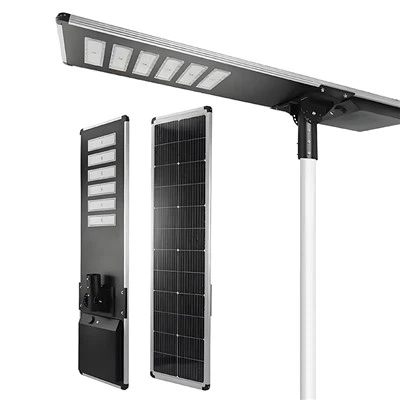
Without relying on the electrical infrastructure, solar street lamps provide illumination. Solar energy is captured by solar cells throughout the day and transformed into electrical energy that is then saved in a battery system. Current and voltage movement are regulated by solar charge regulators. The LED illumination is powered by the dispersed stored energy at night.
Traditional electrical grids that use energy from non-renewable sources power conventional public lamps. They are linked in a series pattern that was meticulously thought out. It is necessary to link conventional street lights to a main source and use high-voltage AC mains to power them.
Safety
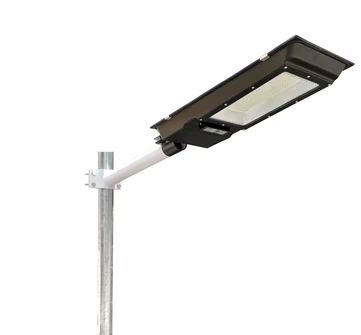
Safety solar public lighting
Since the poles are wireless and autonomous in nature and do not require any energy line connections, solar street lights do not present any risk of cable-related mishaps. Overheating is not a concern, and there are no protruding exterior cables.
Traditional street lights are wired extensively, and the cables are linked to the power immediately. There is always a possibility of electrocution and a good chance of a brief circuit. The risk of strangulation to the employees during implementation is also present.
the setting up of lighting
Installing solar street lamps is easy and straightforward. The installation process is simple and can be completed with minimal personnel and basic tools, saving both labour and money because the system is wireless and has autonomous and integrated components.
Due to the extensive trenching and cable laying needed to link to grid lines, conventional street light construction requires experts. Due to the difficult and drawn-out installation procedure, many workers must be recruited. Additionally, the cost of installation covers expenses for the installation of a transformer, distribution box, switch board, etc.

illumination LED solar street lights
LED bulbs, which use less energy to produce a brighter light, are used in solar public lights. When compared to their contemporary counterparts, LED lights have much greater operating hours and a lower failure rate. LED lights are well known for their great efficiency and extended lifetime.
Due to their capacity to generate bright light, high pressure sodium lamps are usually used in conventional public lighting. In many nations, metal halide lamps are also used for illumination in parking lots, stadiums, and streets. Since halogen lights have a longer lifespan than conventional bulbs, they are also employed. Due to their expensive price compared to other lights, not everyone can buy LED lighting.
Environmental Effects
Solar street lamps run on unrestricted renewable energy, which is cost-effective and environmentally friendly. Carbon traces can be eliminated by using photovoltaic energy. Solar electricity is widely accessible and cost-free. Both light pollution and the expense of the energy used are absent.
Traditional street lighting uses energy derived from non-renewable resources, which results in the emission of carbon dioxide that is bad for the climate. The mercury in metal halide and HPS lights is also toxic to the atmosphere. Global energy usage could be cut by 52%, preventing the creation of 735 million tonnes of carbon dioxide, if all street lights were changed to solar ones.
Beginning expenditure and projected costs
Due to the greater starting expense of solar cells and batteries, solar street lights are more expensive than traditional streetlights. However, given that photovoltaic street lights use free sun energy, they are more cost-effective in the long run. The plug-in-and-play implementation doesn't need a lot of work or special equipment. After construction, solar street lights require almost no human labour and cost less to operate and maintain.
Over time, installing, maintaining, and using conventional public lamps may be more expensive. Traditional street lights require trenching and wiring for new systems in order to link to grid lines. Significant extra costs are incurred as a result, and maintenance expenses are another issue. When sodium lamps are used, their lifespan is only 5 years, and the expense of replacement must also be taken into account. Interdisciplinary flaws can cause harm to a large number of units at once, and new parts can be expensive.
Maintenance
Most of the time, solar street lamps don't need any kind of upkeep. After implementation, the device doesn't need any additional maintenance. Only the luminary cover needs to be occasionally cleansed for improved light production. During rainfall, the majority of the dust or grime on the panels is rinsed away. The panels and batteries typically have extended warranties and should only be changed when they have expired.
Traditional street illumination necessitates ongoing supervision. Whenever necessary, it is necessary to repair the damaged lamps, accessories, and cables. It is always preferable to fix connection issues as soon as they arise. It's crucial to perform routine upkeep on the fuse box and utility cabinet to inspect for loose connections and ensure that the cables are attached correctly. A qualified workforce performs ongoing surveillance and metering.
Solar energy is one of the readily accessible energy sources that has a significant potential to increase lighting quality while lowering expenses and environmental effects. You can select the kind of street lamps based on your needs and the project's money. There are significant variations between solar and conventional street lighting systems, and once you are aware of why so many people and nations are switching to solar lighting, it will be simpler for you to weigh your choices and select the best match.