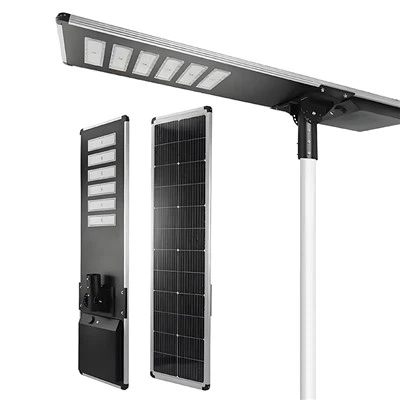
You may want to think about solar lights if you're putting lighting outside your house or place of business. As they don't require any electrical connections, these solar lights are excellent for simple installation. These lights are directly powered by solar panels, and because of built-in batteries, they operate at night as well.
But, it is possible for your solar light to cease working at times, which may be quite aggravating. Thus, we are here with a thorough instruction on how to restore broken solar lights. By reading this tutorial all the way through, you may discover every potential cause of your solar lights ceasing to function.
What exactly are solar lights and how do they work?
If solar lights are new to you, it's possible that you don't understand how they work very well. You'll be relieved to learn that these lights are rather straightforward to install in such situation.
The light source in the majority of solar lights is made up of many LED bulbs. They have a solar light that charges a built-in battery to keep the light on all night long as far as powering the solar light is concerned. A solar light might also have a light detector in addition to these essential parts, which would turn your solar lights on automatically at night.
Why don't your solar lights function?
Fixing problems like solar lights not working may be simpler now that you are more knowledgeable about solar lights and how they operate in general. And to make matters more simpler, it is strongly advised to find out why your solar lights may have first ceased functioning. Although there are many potential causes, the following are the main ones that might make your solar lights cease working:
1. A pull tab is present on solar lights.
There is a good probability that the battery on your new solar lamp has a pull tab if you just bought it. To prevent the battery from being damaged during transportation, a pull tab is installed. Nevertheless, this also implies that until this tab is removed from your solar lights, neither the battery nor the solar light itself will function. Therefore, be sure to remove any pull tabs that you may see after opening the battery cover.
2. Inspect each switch and processor.
Solar lights require several switches and internal microprocessors since they turn on and off automatically. Because of this, your solar light will cease functioning if any of these switches or microprocessors malfunction. You must ensure that all switches on your solar light are activated and switched on in order to address any potential problems with the same.
3. Insufficient Sunlight is Getting to Solar Lights
Solar lights require sunlight to function, thus if they are not receiving enough of it they will not function. In order for your solar light to function correctly, make sure that it is installed or put in an area where it receives enough sunshine to charge its battery. Another option is to try tilting the solar panel so that it receives more light.
4. Examining the cables of solar panels
Solar lights contain several internal power wires while not requiring any external electricity. These wires are used to link the battery within, the light unit, and the solar panel. Making ensuring the wires are linked is crucial if any of the cables are accessible. You can remove the wires and reattach them again if you believe any of them are not connected correctly.
5. Lighting Options Close to Your Solar Lights
As was previously noted, the majority of solar lamps include an internal light sensor. As it grows dark, the light sensor recognizes it and switches on the lights accordingly. Nevertheless this sensor will continue to believe it is day and not switch on the lights if your solar lights have other light sources nearby. As a result, you must ensure that your solar lights are situated far from other light sources if you wish to utilize them effectively.
6. Motion detectors with PIR dials
Some solar lights may also have motion detectors in addition to light detectors so that the light will only turn on when there is motion nearby. While these motion detectors often function flawlessly, if their sensitivity is off, they may prevent your solar light from operating. Thus, you might want to try setting the motion detector dial so that it appropriately turns on the night when it senses any motion.
7. Faulty Light Sensors
There is a chance that the sensors themselves are malfunctioning because most solar lights contain numerous sensors, including a light sensor and a motion sensor. In this scenario, even if there is motion outside of your solar light in the dark, it won't switch on. As a result, you can think about cleaning your solar light sensors to see if it helps.
8. Dead Batteries
It is crucial that your solar light has working batteries since a solar light depends on them to power its light unit at night. If the batteries are really old and have used up all of their battery cycles, they can stop functioning. You could try switching out your batteries for newer ones in this situation.
9. Water Collects in Solar Lights
A solar light will likewise cease to function if it contains any water, just like any other light. Solar lights, which are often located outdoors and exposed to rain and snow, exacerbate this problem. While water-resistant solar lights are an option to avoid this, your current lighting might not have it. If you suspect that your solar lights contain water, you might try opening them up, draining out all the water, and then drying them out thoroughly before trying to use them again.
10. LED Light Bulbs Do Not Operate
Your solar lights' inability to function might also be caused by the LED bulbs themselves not functioning. Even if the solar panel, battery, and sensors are all functioning properly in this scenario, your solar light won't switch on. If the LED bulbs are not changeable, your only option in this situation is to purchase a brand-new solar light.
How can you fix the problem with your broken solar lights?
Even though we've previously covered some of the most typical reasons why solar lights could stop working and how to fix them, there are still a few more remedies that you might be interested in learning about. If so, you could think about testing the following with your solar lights to see whether it works:
To guarantee that your solar lights are energized likely, it is crucial to make sure they receive enough sunshine. Your solar lights must be installed in the proper place so that the angle is suitable and it receives adequate sunshine.
Your solar light's solar panel has to be cleaned frequently since dust and other debris can gather there. This may prevent sunlight from reaching the solar panel, which may prevent the operation of your solar lights.
You should position your solar light away from any other light sources if there are any nearby. This is because solar lamps feature a light sensor that will turn the light off if another light source is present nearby.
If your solar light doesn't remain on for a long time, it's probably because your batteries need to be replaced because they've degenerated from constant usage. By purchasing new batteries for your solar lights, you may resolve this problem.
Placing your palm on top of your solar light will allow you to quickly test the sensors. If the light comes on, the sensor is functioning properly. If not, your solar light is not functioning because the solar panel is not functioning correctly.
Conclusion
You must have a pretty good understanding of solar lights not working after reading this comprehensive information on the subject. We've previously covered all the potential causes of your solar lights not working in our article. Yet, the most crucial thing is that you can discover a remedy for individuals whose solar lights aren't operating. You should be able to quickly get your current solar lights running with the assistance of this article, saving you the expense of purchasing new ones. If you have read the information provided above on the problem with the solar lights not working, be sure to leave your feedback. If you have any questions, you may submit them there as well!

|
Product name |
Benwei Led Flood Light |
|
LED power |
100W/200W/300W |
|
CCT |
3000K-6000K |
|
CRI |
>60 |
|
Housing material |
Aluminum |
|
Adaptor |
Wall charger and Car charger |
|
Working Temperature |
-25 ℃ to 50 ℃ |
|
Beam Angle |
120 ℃ |